BIOGRAPHY
Gustavo Galvão is a Brazilian filmmaker, producer and screenwriter. He released seven short films between 2002 and 2008, shown worldwide and acquired by TV broadcasters, platforms and audiences’ development programs in Brazil. Highlights are the award-winning Life Next Door (A Vida ao Lado, 2006) and My Own Way of Being Alone (A Minha Maneira de Estar Sozinho, 2008), official selection of the 22nd Rencontres Cinémas d'Amérique Latine de Toulouse (in France).
Galvão's first feature, Nine Chronicles for a Screaming Heart (Nove Crônicas para um Coração aos Berros, 2012), won a special mention from the FIPRESCI Jury at the 31st International Film Festival of Uruguay and was awarded with the Best Director Prize at the 10th Maringá Film Festival (Brazil, 2013). Commercially released in ten cities in Brazil, the movie is available throughout Latin America on Apple TV and was available also on Netflix (2015-2017). Since 2023, it can be found on all continents on the platform KINOA.TV.
His second feature film, the critically acclaimed A Violent Dose of Anything (Uma Dose Violenta de Qualquer Coisa, 2013), was released in 17 cities and is also available on all continents on KINOA.TV, where it premiered in 2021.
The third feature directed by Galvão, We Still Have the Deep Black Night (Ainda Temos a Imensidão da Noite), was shot in September and October 2017 in locations in Berlin and Brasilia. The release took place in 2019 and the film was awarded with the Best Cinematography and the Best Editing prizes at the 52nd Brasilia Film Festival and the Best Performance prize at the 22nd BAFICI (Argentina, in 2021). The film was commercially released in 17 cities. In 2021/2022, it reached the main platforms in 118 countries and territories, including the USA, Canada, Australia, the United Kingdom, France, Spain and throughout Latin America.
In 2023, the director reached the mark of five features by releasing two films: the experimental Inventory of Lost Images (official selection of the 41st Uruguay International Film Festival, in April) and the drama Bleak Sunday Afternoons (selected to the 47th São Paulo International Film Festival, in October).
In more than two decades working as filmmaker, Galvão has already directed great names of the Brazilian cinema and theater. He worked with actors such as Leonardo Medeiros (awarded with the Best Actor Prize at the Brasilia Film Festival for Life Next Door), Simone Spoladore (honored at Tiradentes Film Festival with the screening of Nine Chronicles for a Screaming Heart), Marat Descartes (also honored at Tiradentes, with the screening of A Violent Dose of Anything, which earned him the Best Supporting Actor Prize in the FIESP/SESI-SP Awards, in 2015), Denise Weinberg, Mário Bortolotto, Júlio Andrade, Silvia Lourenço, Cacá Amaral, Fernando Teixeira, and Erom Cordeiro, among others. With We Still Have the Deep Black Night, the challenge was to put together a rock band with real musicians and make the most of themselves as actors. One of the founders of Sonic Youth, Lee Ranaldo was the producer of the original soundtrack of the movie.
The filmmaker has been working also as curator and programmer of festivals and exhibits, having developed 12 events for Centro Cultural Banco do Brasil (Rio, São Paulo, and Brasilia) and one for Caixa Cultural (Rio de Janeiro), besides previous participations as programmer at the Brasilia International Film Festival and at the São Paulo International Short Film Festival.
PERSONAL DATA
Brasilia, Brazil, 1976
Degree in Journalism, University of Brasília (1999)
Specialization in Film at Escuela Universitaria de Artes y Espectáculos (former Escuela Superior de Artes y Espectáculos, Madrid, 2003)
Managing partner at 400 Filmes (Brasilia)
IMDb page
MUBI page
Vimeo Showcase
FEATURE FILMS
O Vazio de Domingo à Tarde (Bleak Sunday Afternoons | 2K | 2023)
Inventário de Imagens Perdidas (Inventory of Lost Images | 2K | 2023)
Ainda Temos a Imensidão da Noite (We Still Have the Deep Black Night | 2K | 2019)
Uma Dose Violenta de Qualquer Coisa (A Violent Dose of Anything | 35mm | 2013)
Nove Crônicas para um Coração aos Berros (Nine Chronicles for a Screaming Heart | 35mm | 2012)
SHORT FILMS
A Minha Maneira de Estar Sozinho (My Own Way of Being Alone | 35mm | 2008)
A Vida ao Lado (Life Next Door | 35mm | 2006)
Uma Questão de Tempo (A Matter of Time | 35mm | 2006), codirected with Catarina Accioly
Uma Noite com Ela (A Night with Her | 35mm | 2005)
Danae (35mm | 2004)
As Incríveis Bolinhas do Dr. Sorriso Sarcástico (Dr. Sarcastic Smile's Amazing Pills | 16mm | 2003)
Emma na Tempestade (Emma in the Storm | 35mm | 2002)
VISUAL ARTS
Arqueologia Sentimental das Cidades que não Vivi (Sentimental Archeology of Cities I Didn't Live | short | HD | 2020)
FEATURE FILMS
2012 / 2023

O VAZIO DE DOMINGO À TARDE
Bleak Sunday Afternoons
Brazil, 2K, 94 minutes, 2023
Director, screenwriter and producer
More information on the film:
Instagram
Facebook
* Sponsored by the Audiovisual Sector Fund (2018, Brazil)
* Premiere at the 47th São Paulo International Film Festival (October 2023)
* Selected to the 42nd Uruguay International Film Festival (Montevideo, March 2024)
Two parallel stories. One of them is the story of Mônica, 35, an actress frazzled by overexposure and the relentlessness of celebrity life. Her crisis deepens when she stays in Brasilia for a while as her husband takes care of his dying father. The other one is Kelly’s story. She is a 16-year-old teenager from a small town in Central Brazil, where Mônica has been shooting an independent movie. Kelly dreams of being like Mônica and unsuccessfully tries to speak to her. The girl will not give up and decides to try to meet her muse again.

INVENTÁRIO DE IMAGENS PERDIDAS
Inventory of Lost Images
Brazil, 2K, 77 minutes, 2023
Director, screenwriter and producer
More information on the film:
Instagram
* Premiere at the 41st Uruguay International Film Festival (Montevideo, April 12th 2023)
* Selected to the 47th São Paulo International Film Festival (Brazil, 2023), 38th Trieste Ibero Latin American Film Festival (Italy, 2023) and 15th Frontier International Film Festival (Brazil, 2024)
* Released at the Cinemateca Uruguaya (Montevideo, Uruguay, April 2024)
In the near future, a fundamentalist revolution throws Brazil into civil war. Two women go on the run and hide in the countryside. Their paths cross in a house populated by the memories of an old filmmaker as forgotten as cinema itself.

AINDA TEMOS A IMENSIDÃO DA NOITE
We Still Have the Deep Black Night
Brazil/Germany, 2K, 98 minutes, 2019
Director, screenwriter and producer
Co-author of the lyrics of the original soundtrack
More information on the film:
https://apptuts.bio/imensidodanoitefilme
* Sponsored by the Audiovisual Sector Fund (Prodecine 05/2015, Brazil)
* Development sponsored by the Audiovisual Sector Fund (Prodav 04/2013, Brazil)
* Selected to 15 film festivals in Brazil and abroad, such as: 22nd BAFICI (Buenos Aires, Argentina, 2021), 51st International Film Festival of India (Goa, 2021), 35th Trieste Latin American Film Festival (Italy, 2020), 37th Bogotá Film Festival (Colombia, 2020), 16th Jecheon International Music & Film Festival (South Korea, 2020), 41st Havana Film Festival (Cuba, 2019), 43rd São Paulo International Film Festival (Brazil, 2019), and 52nd Brasilia Film Festival (Brazil, 2019)
* Best Performance award (to Ayla Gresta), 22nd BAFICI (Buenos Aires, Argentina, 2021)
* Best Cinematography and Best Editing awards – 52nd Brasilia Film Festival (2019)
* Released in 17 cities in Brazil (December 2019-February 2020)
* Available throughout Brazil on Canal Brasil TV (2020-2023)
* Available throughout Brazil on six platforms: Prime Video and Looke (since July 2021), Apple TV, Google Play, PlayStation Video and YouTube Movies (since April 2021); previously available also on MUBI (2022), NOW, Vivo Play and Oi Play (2020-2023)
* Available on platforms such as Prime Video, Apple TV, Google Play and Guayaba in 118 countries and territories, including the USA, Canada, Australia, the United Kingdom, France, Portugal, Spain and throughout Latin America (releasing between March 2021 and February 2022); previously available also on KINOA.TV (2021-2022)
* Original Soundtrack available throughout the world on platforms such as Spotify, Deezer, Apple Music and YouTube (since January 2020).
Tired of the struggle with her vigorous rock band, where she sings and plays the trumpet, Karen leaves Brasilia. She tries her luck in Berlin, following the steps of her former partner Artur. The invitation comes from Martin, a German friend with whom they form an unpredictable triangle.
The film was shot in Brasilia and Berlin, in 2017. The release took place in 2019 (at the 43rd São Paulo International Film Festival) and it was awarded with the Best Cinematography and the Best Editing prizes at the 52nd Brasilia Film Festival and the Best Performance prize at BAFICI 2021. The film was commercially released in 17 cities, in 2019 and 2020. In 2021 and 2022, it reached the main platforms in 119 countries and territories, including the USA, Canada, Great Britain, Spain, France, Australia and throughout Latin America – including ten platforms in Brazil, such as MUBI, Amazon Prime Video and Apple TV.

UMA DOSE VIOLENTA DE QUALQUER COISA
A Violent Dose of Anything
Brazil, 35mm, 96 minutes, 2013
Director, screenwriter and producer
* Sponsored by the Culture Support Fund (Brasilia)
* Selected to eight film festivals in Brazil and abroad, such as: 46th Brasilia Film Festival (Brazil, 2013), 37th São Paulo Intl. Film Festival (Brazil, 2013) and 17th Tiradentes Film Festival (Brazil, 2014)
* Câmara Legislativa Award for Best Soundtrack – 46th Brasilia Film Festival (2013)
* Best Supporting Actor – 11th FIESP/SESI-SP Movie Awards (Marat Descartes, 2015)
* Released in 17 cities in Brazil (August-October 2014)
* Available on Canal Brasil TV (2015)
* Available throughout Brazil on Prime Box Brazil TV (2019-2021)
* Available throughout Brazil on Box Brazil Play and KINOA.TV (since 2021) and on NOW (since 2015); previously available also on Indie Cine (2017-2021)
* Available on all continents on KINOA.TV (since 2021 in Latin America, Portugal and Spain; since 2023 in other territories)
Pedro has run away from home, taken the road and he does not know where he is going. Lucas does not know it either, but the road is his stage. They are over 30, and all they take with them is the clothes they are wearing. And after meeting at a roadside café, in the state of Minas Gerais, they travel through the Brazilian savannah seeking for a violent dose of anything.

NOVE CRÔNICAS PARA UM CORAÇÃO AOS BERROS
Nine Chronicles for a Screaming Heart
Brazil, 35mm, 93 minutes, 2012
Director, screenwriter and producer
* Independent production, finished with the support by the Culture Support Fund (Brasilia)
* Selected to ten film festivals in Brazil and abroad, such as: 36th São Paulo International Film Festival (Brazil, 2012), 16th Tiradentes Film Festival (Brazil, 2013), 31st International Film Festival of Uruguay (2013) and 16th Cine Las Americas International Film Festival (Austin, USA, 2013)
* Mention of the ACCU/FIPRESCI Jury – 31st International Film Festival of Uruguay (2013)
* Best Director – 10th Maringá Film Festival (2013)
* Released in ten cities in Brazil (2013-2017)
* Available on Canal Brasil TV (2014-2017)
* Available on Brasil TV (2015)
* Available on Prime Box Brazil TV (2018-2020)
* Available throughout Latin America on Netflix (2015-2017)
* Available throughout Latin America and in Spain on iTunes (since 2014)
* Available on all continents on KINOA.TV (since 2023; previously available in 24 Ibero-American countries on the same platform as part of a program dedicated to the director, in Jan-Feb 2022)
* Available throughout Brazil on Apple TV, Google Play, Now and YouTube (since 2014), Looke (since 2017) and KINOA.TV (since 2023)
Larissa is no longer in love with Mário; Leopoldo does not know whether to stay or go; Júlio still lives with his mother; Simone is tired of working as hooker; Vanise is reminded of what it means to be a woman; Philipp does not want to go back home; Carol carries a graveyard of memories with her; André wants to make a different kind of sound; Denise decided to have new experiences while there is still time. In this surprising mosaic of human relationships and day-to-day situations, men and women of different ages feel a pressing need to reinvent themselves. They all are, each in their own way, at a turning point in their lives.
SHORT FILMS
2002 / 2008

A MINHA MANEIRA DE ESTAR SOZINHO
My Own Way of Being Alone
Brazil, 35mm, 15 minutes, 2008
Director and producer
Swede is a young man in his 20's. He doesn't know how to dance, how to flirt or how to relax. Swede would like to have someone to talk to, but he is alone. Except for Melissa, the only woman in the world who can understand him.
A VIDA AO LADO
Life Next Door
Brazil, 35mm, 13 minutes, 2006
Director, screenwriter and producer
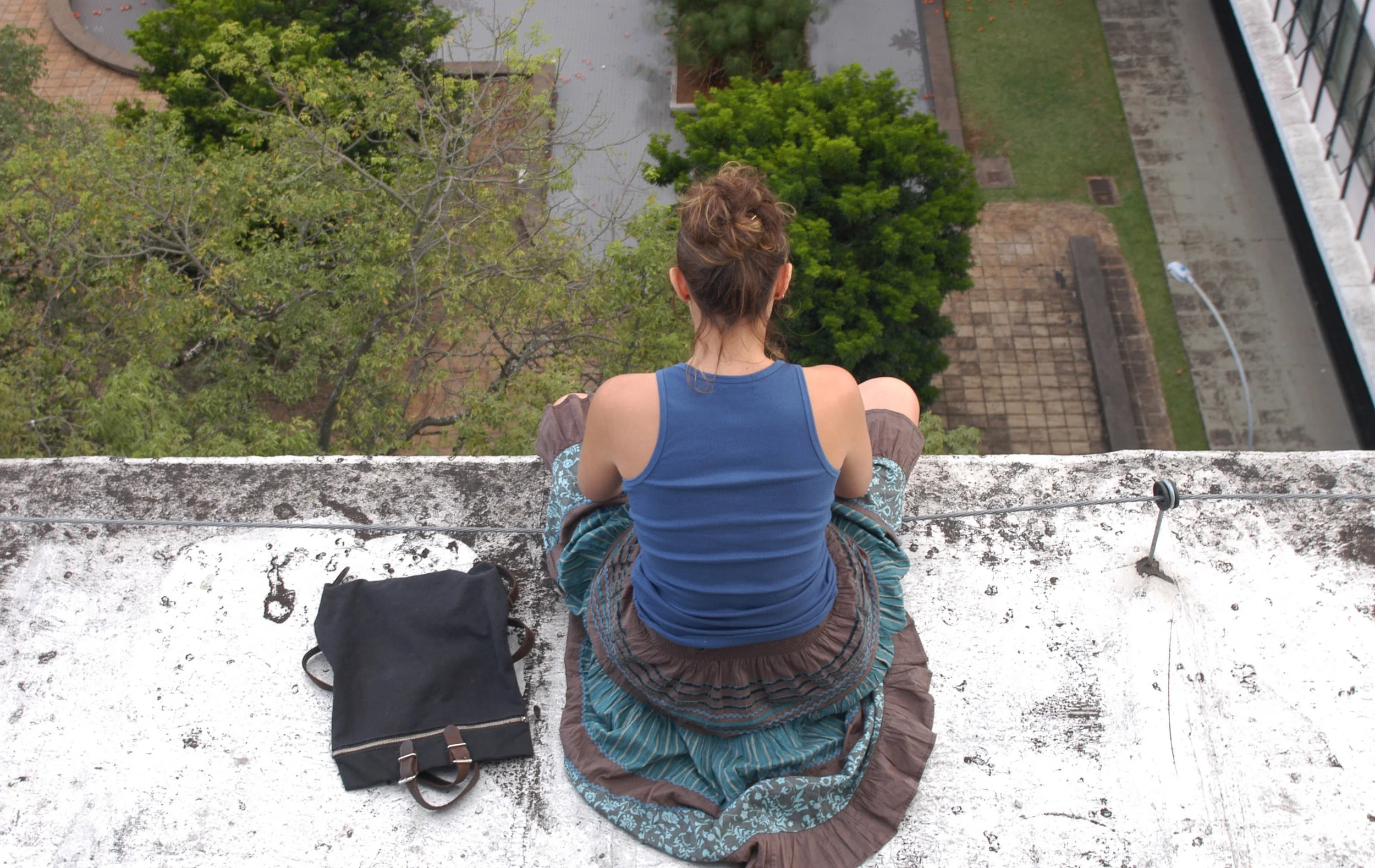
Cecilia is in love with her neighbor Ana, who is trying to seduce Alberto. She ignores that he is about to commit suicide. In a day full of surprises, the three neighbors share the same experience: love.
UMA QUESTÃO DE TEMPO
A Matter of Time
Brazil, 35mm, 15 minutes, 2006
Director (with Catarina Accioly)
UMA NOITE COM ELA
A Night with Her
Brazil, 35mm, 07 minutes, 2005
Director and producer
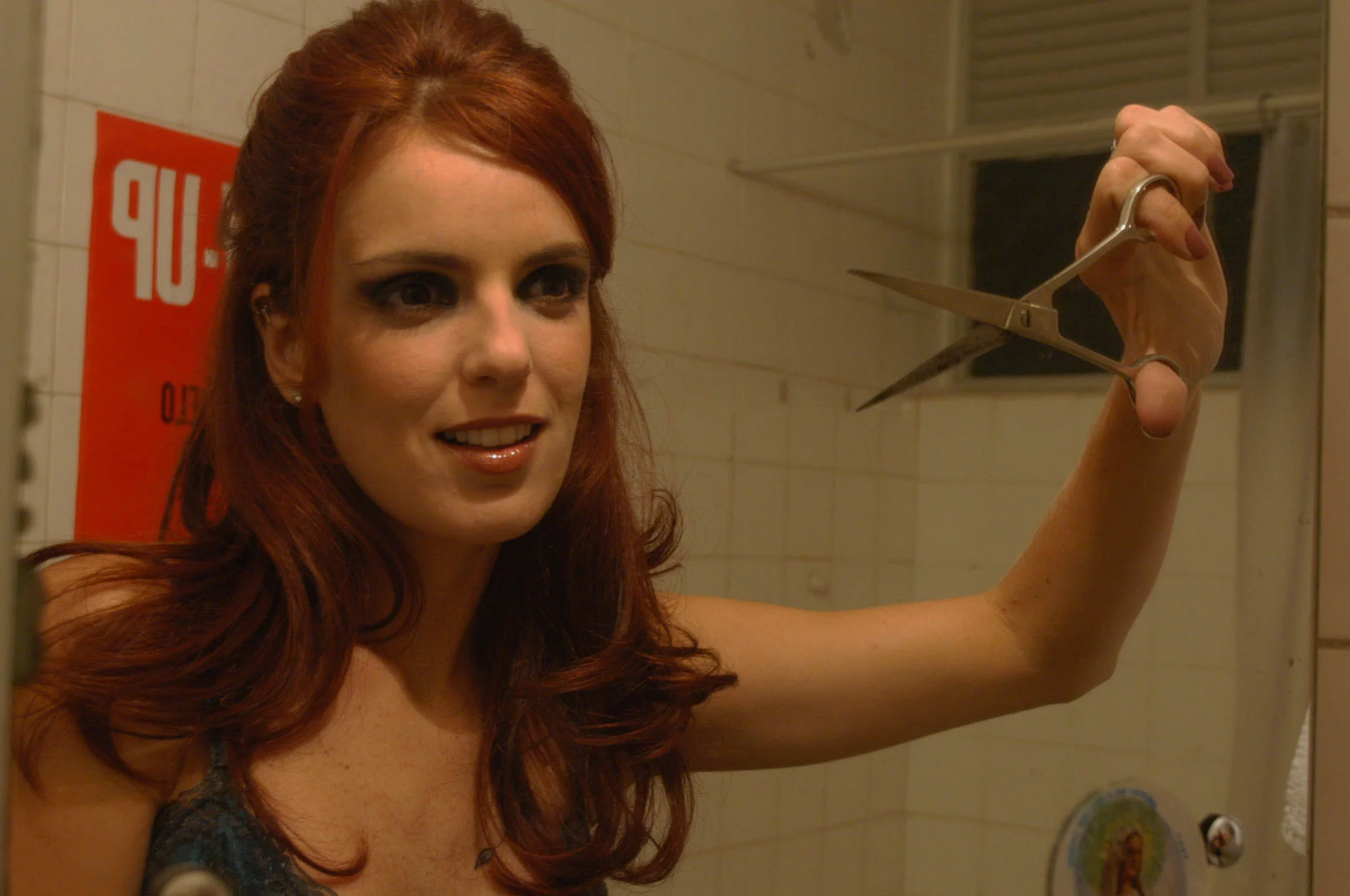
In a small elevator, a man and a woman are getting ready for a night together. After they kiss, she invites him into her apartment. What now? In the night, anything can happen.
DANAE
Danae
Brazil, 35mm, 09 minutes, 2004
Director, screenwriter and producer
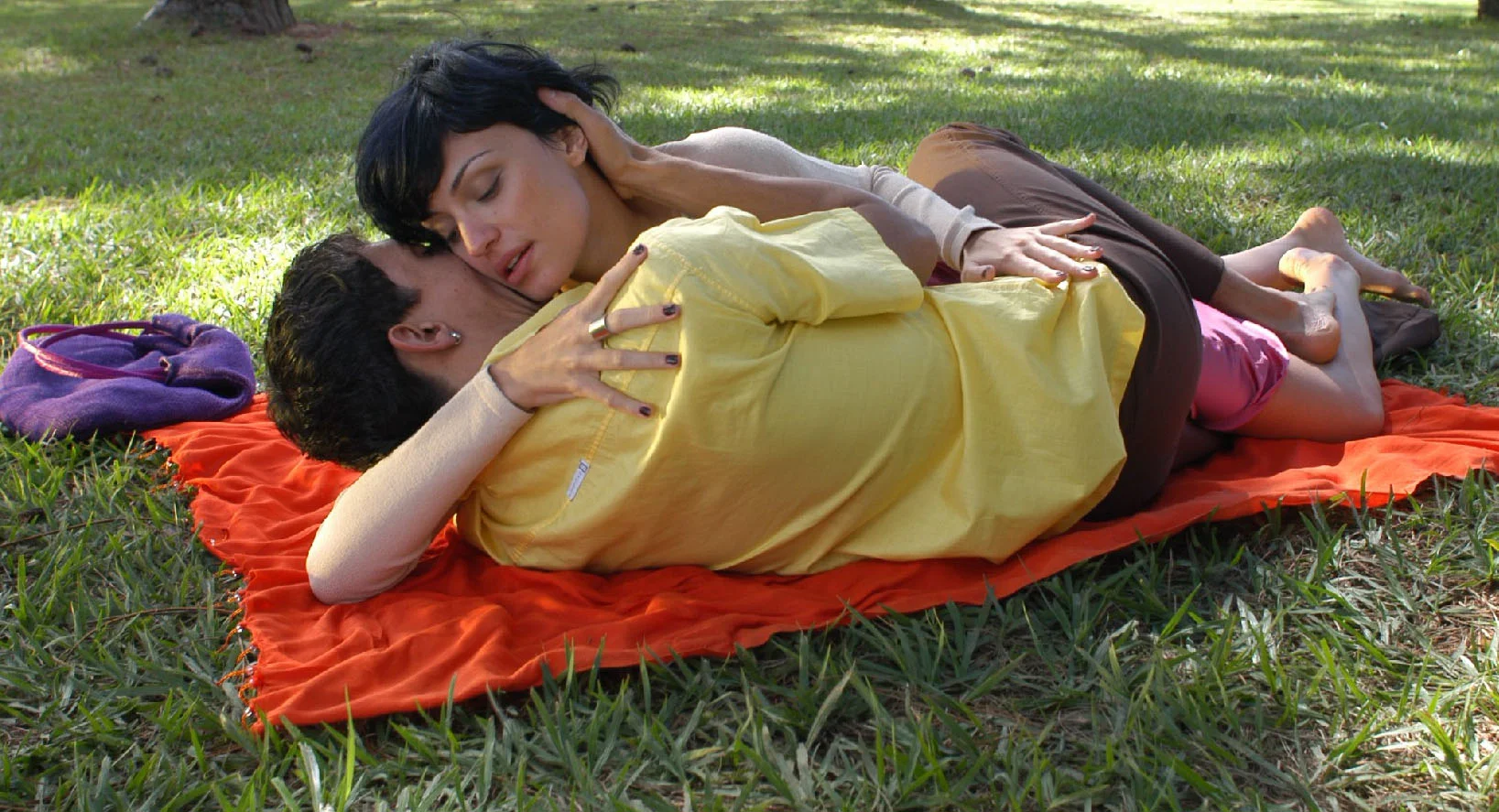
A woman and a man are kissing in a park. Time passes, the relationship cools down and suddenly the man leaves Maria. She suffers. Until an unknown woman embraces her from behind. Maria rediscovers feelings that had been stifled by anger.

AS INCRÍVEIS BOLINHAS DO DR. SORRISO SARCÁSTICO
Dr. Sarcastic Smile's Amazing Pills
Brazil, 16mm, 09 minutes, 2003
Director, screenwriter and producer
Tormented by his weight problem, a young man decides to seek medical help, yet again. This time, he will get a surprise. Dr. Sarcastic Smile is willing to test his most radical weight-loss programs on the unwitting patient.
EMMA NA TEMPESTADE
Emma in the Storm
Brazil, 35mm, 15 minutes, 2002
Director, screenwriter, producer and editor
A man and a woman see each other on a bus and exchange glances. A sensual game of insinuations starts, and the next day it happens again. The game ends on the third night, with the woman’s disappearance. The man starts looking for her.